Tug of War
Tug of War is a physical coordination exercise in which two individuals or two teams mime pulling on an imaginary rope, working together to create the illusion of a shared physical object and competitive struggle. The exercise trains group coordination, physical commitment, and the ability to create believable shared reality through synchronized physical engagement.
Structure
Pair Version
Participants divide into pairs with space between them. Each pair picks up the imaginary ends of a mime rope. On the facilitator's cue, the pairs engage in tug of war: pulling, leaning, bracing against resistance, responding physically to the partner's force. Neither player is predetermined to win; the physical negotiation continues until the facilitator ends the exercise.
Team Version
All participants divide into two teams. Both teams pick up the imaginary rope and pull together against the other side. The exercise requires the team to coordinate their physical effort: leaning, stepping, and pulling in unison to create the impression of collective force applied to a shared object.
Bill Lynn documents this version as a group mind exercise: the teams must work together to develop a shared physical reality without prior planning.
Applied Variant
Joanna Dudeck uses the exercise in applied improvisation contexts, framing the two groups as attempting to pull each other across an imaginary boundary line. This version connects the physical experience to concepts of collaborative effort and uncertainty, and is documented in the Applied Improvisation Mindset as a beginning exercise appropriate for groups new to physical ensemble work.
How to Teach It
How to Explain It
"There is a rope between you. You cannot see it, but you can feel it. Find the weight of it, the resistance, the texture. Two groups. Pull."
Objectives
Tug of War develops physical commitment to imaginary objects, group coordination, and the experience of creating shared reality through physical negotiation rather than verbal agreement. The exercise is useful early in a workshop because it provides an immediate, embodied demonstration of ensemble co-creation: the rope only exists if both parties agree on its physical properties and respond to each other's forces.
Salinsky on the Transfer to Scene Work
Salinsky uses the exercise to introduce the concept that performers must genuinely respond to what is offered, not to what they expected to be offered. A performer who does not respond to their partner's pull in tug of war is immediately visible; the same failure mode in a scene is less visible but equally present. The exercise makes the failure mode concrete before moving to verbal scene work.
Applied Contexts
In applied settings, Dudeck frames the exercise as a demonstration of collaborative effort under uncertainty: the group must work together physically to accomplish a goal with no scripted outcome. The exercise is accessible for groups unfamiliar with improv because the task (pulling a rope) is culturally familiar even when the rope itself is imaginary.
Common Coaching Notes
- "Feel the weight. If you're not feeling resistance, your partner isn't either."
- "When your partner pulls harder, you have to respond. The rope doesn't lie."
- "You can't win if the other side doesn't feel like they might win too."
Variations
Known variants of Tug of War with distinct rules or structure.
Tug-O-War
Tug-O-War is a group exercise in which two teams mime pulling on opposite ends of an imaginary rope, coordinating their movements to create the illusion of genuine physical struggle. The exercise trains ensemble physicality and the ability to create a believable shared object through synchronized effort.
In Applied Settings
Learning Objectives
Tug of War develops physical commitment to imaginary objects, nonverbal coordination, and the experience of co-creating shared reality without props. In organizational settings, the exercise draws attention to the role of mutual investment in collaborative tasks.
Workplace Transfer
The exercise is used by facilitators to open conversations about team dynamics: who initiates, who holds back, who gives way, and what happens when both sides pull with equal force. Debriefs often surface language about leverage, compromise, and deadlock.
Facilitation Context
Tug of War works with groups of 8 to 20 participants where physical engagement is appropriate. It requires cleared floor space. Reduce the intensity for groups where competitive dynamics might be sensitive.
Debrief Framing
- "What made it feel like there was a real rope?"
- "When did you start to believe in the object?"
- "Were you paying attention to your own grip or your partner's?"
- "Where in your work do you create shared realities through assumption rather than agreement?"
Skills Developed
History
Tug of War with an imaginary rope is documented by multiple improv writers independently, suggesting it entered common workshop practice without a single identified originator.
Brian Levy documents it as Exercise 10 in 112 Acting Games (2005), with participants in pairs standing with space between them. Tom Salinsky describes the pair version in The Improv Handbook (2008), using it to introduce the concept of creating believable shared physical reality: "get everyone to find a partner and play Tug Of War with a mime rope." Bill Lynn documents the team version in Improvisation for Actors and Writers as a group mind exercise. Joanna Dudeck adapts the structure for applied improvisation training in The Applied Improvisation Mindset.
The exercise draws on the longer tradition of mime object work, in which performers create the physical reality of objects that do not exist through precise physical commitment and coordination.
Worth Reading
See all books →
The Improv Handbook
The Ultimate Guide to Improvising in Comedy, Theatre, and Beyond
Tom Salinsky; Deborah Frances-White

Acting Through Improv
Improv Through Theatresports
Lynda Belt; Rebecca Stockley

When I Say This, Do You Mean That?
Enhancing Communication
Cherie Kerr; Julia Sweeney

The Applied Improvisation Mindset
Tools for Transforming Individuals, Organizations, and Communities
Theresa Robbins Dudeck; Caitlin McClure

Improvisation for Actors and Writers
A Guidebook for Improv Lessons in Comedy
Bill Lynn
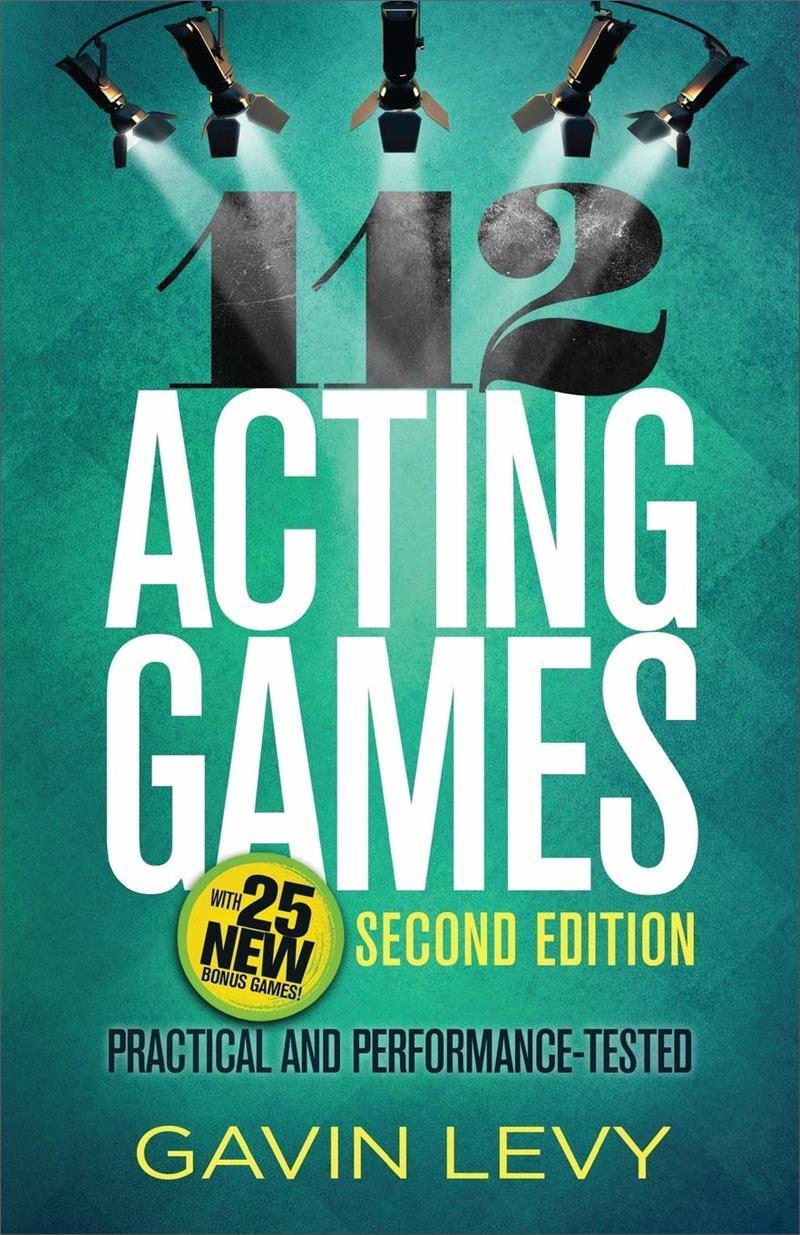
112 Acting Games
Gavin Levy
Related Exercises
Tug-O-War
Tug-O-War is a group exercise in which two teams mime pulling on opposite ends of an imaginary rope, coordinating their movements to create the illusion of genuine physical struggle. The exercise trains ensemble physicality and the ability to create a believable shared object through synchronized effort.
Machines
Machines is a group exercise in which players collectively build an imaginary apparatus by adding interlocking physical movements and sounds one performer at a time. A facilitator may call out a theme or type of machine, prompting the group to adapt their contributions accordingly. The exercise trains ensemble listening, physical expressiveness, and creative collaboration.
Circle of Knots
Circle of Knots is a group problem-solving exercise in which players reach across the circle to take two different hands, then work together to untangle the resulting human knot. The exercise requires patience, spatial reasoning, and collaborative communication. It is closely related to Arm Tangle and commonly used as an icebreaker.
The Machine
The Machine is a group exercise in which players build a collective apparatus by adding interlocking physical movements and sounds one at a time. Each new contributor must connect their action to the existing mechanism. The exercise develops ensemble coordination, physical commitment, and the ability to contribute to a shared creation.
Human Knot
Human Knot is a group problem-solving exercise in which players reach across a circle to grab two different people's hands, then untangle the resulting knot without releasing their grip. The exercise requires patience, spatial reasoning, and collaborative communication. It is one of the most widely used team-building exercises across disciplines.
Back to Back
Back to Back is a trust and connection exercise in which two players sit or stand with their backs pressed together and work together on a physical or verbal task without the benefit of eye contact. Common tasks include standing up simultaneously from a seated position, telling a collaborative story, or mirroring each other's movements through physical pressure alone. The absence of visual cues forces participants to communicate through weight, pressure, breath, and vocal tone, developing a physical listening channel that operates independently of sight. The exercise appears across multiple performance traditions, from Augusto Boal's Games for Actors and Non-Actors to John Abbott's The Improvisation Book, and is one of the most widely used partner exercises in both improv training and applied improvisation settings.
How to Reference This Page
The Improv Archive. (2026). Tug of War. Retrieved March 17, 2026, from https://improvarchive.org/exercises/tug-of-war
The Improv Archive. "Tug of War." The Improv Archive, 2026. https://improvarchive.org/exercises/tug-of-war.
The Improv Archive. "Tug of War." The Improv Archive, 2026, https://improvarchive.org/exercises/tug-of-war. Accessed March 17, 2026.
The Improv Archive is a systemically maintained repository. The archive itself acts as the corporate author.