Pillars
Pillars is a short-form game in which two or more players stand stock-still onstage as human pillars. Scene players perform a two-person scene, and whenever a scene player taps a pillar, that pillar delivers a random line of dialogue. The scene player must immediately accept and incorporate the line into the scene. The unpredictable verbal intrusions test the performer's ability to justify bizarre offers on the spot and maintain scene logic under pressure.
Structure
Setup
Two players are designated as pillars and stand at fixed positions on stage, arms relaxed, facing the audience. They do not move or speak unless tapped. Two scene players perform a scene between the pillars.
An audience suggestion establishes the scene's relationship, location, or premise.
Gameplay
The two scene players perform. Whenever a scene player chooses, they can tap a pillar on the arm or shoulder. The tapped pillar immediately delivers a line of dialogue, ideally something unexpected, strange, or contextually incongruous.
The scene player who tapped must incorporate that line into the scene, accepting it as a genuine contribution: finding a justification for what was said, building on it, or using it to redirect the scene. The pillar returns to stillness. Scene players may tap pillars as frequently or sparingly as they choose.
Pillar Protocol
Pillars should not prepare their lines in advance or attempt to be helpful: the game's comedic and technical value comes from the genuine surprise of the offer. Pillars may look at the audience for inspiration, deliver the first thing that arrives, or use stock phrases that become funny through context. Some facilitation traditions provide pillars with specific content types (questions only, statements only, non sequiturs).
Variation
In some formats, a third offstage player whispers lines to the pillars in advance, making the pillar a conduit for audience-supplied material. In others, audience members physically become the pillars and supply their own lines when tapped, with no coaching.
How to Teach It
How to Explain It
"Two performers are in a scene. Two others are pillars: they stand frozen in the space. When a scene performer touches a pillar, the pillar speaks one line and freezes again. That line is part of the scene. You cannot plan when a pillar will activate."
Objectives
Pillars trains unconditional acceptance of external offers: the scene player has no choice but to incorporate the line; there is no "no" available. This forced acceptance makes the training value explicit and observable, which is useful for groups that intellectually understand "Yes And" but still habitually block or hedge in practice.
The game also trains justification speed: the ability to find a logical frame for an illogical offer within the time pressure of a live scene. Players who excel at Pillars develop a flexible narrative imagination that can retrofit any offer into an existing scene context.
Scaffolding
For groups new to acceptance, begin with a warm-up round where pillars deliver very simple, concrete lines ("The door is open," "I found twenty dollars") before introducing absurd or contextually dissonant content. This lets players practice the acceptance rhythm before the difficulty of justification peaks.
For groups with strong acceptance skills, instruct pillars to deliver lines as incongruous as possible: non sequiturs, complete topic changes, lines from a wholly different genre. This pushes the scene players to find creative justifications rather than easy ones.
Common Coaching Notes
- "Do not pause after the tap. The line is yours to use immediately."
- "There is no wrong answer from the pillar. Everything given must be incorporated."
- "Pillars: give the first thing that arrives. Helpful lines are not your job."
- "Tap when you need a gift, not when you've already solved the scene."
How to Perform It
Audience Experience
Pillars works especially well for audiences unfamiliar with improv because the constraint is visually legible: the frozen figures, the tap, the mandatory incorporation. Audiences can see and feel the pressure the scene player is under, and their investment in whether the player will successfully integrate the offer creates genuine comedic tension.
The funniest moments in Pillars usually come from the accumulation of bizarre incorporated offers within a single scene, when the scene player has stacked multiple strange justifications and the fictional world of the scene has become increasingly surreal as a result.
Directing the Game
Pillars should be coached not to hold back: a timid or context-sensitive line from a pillar reduces the game's comedic value. The scene players' skill is measured against the difficulty of what they receive; easy lines produce easy integration. The game rewards pillars who deliver genuinely unexpected content and scene players who accept without hesitation.
For pacing, scene players should not tap too frequently (every other line) or too rarely (once at the end). A rhythm of two to four taps per minute tends to sustain the game's pressure while allowing enough scene to build between intrusions.
History
Pillars is documented by Tom Salinsky and Deborah Frances-White in The Improv Handbook as a short-form game alongside similar games (Arms Through, Speak In One Voice, He Said She Said) that exploit the division between the player's verbal and physical channels or between scene players and external inputs.
The game is associated with Whose Line Is It Anyway?, the British improv television series (Channel 4, 1988-1998) and its American adaptation (ABC, 1998-2007), where short-form games using unusual physical constraints and external verbal inputs were a central format. Pillars fits squarely within the Whose Line game taxonomy: a structural constraint that places scene players in a relationship of forced acceptance with an unpredictable input source.
No individual originator of the Pillars game has been identified in published sources. It represents a structural solution to the pedagogical problem of training unconditional acceptance of unexpected offers, adapted for a performance context where the unpredictability is built into the game's architecture.
Worth Reading
See all books →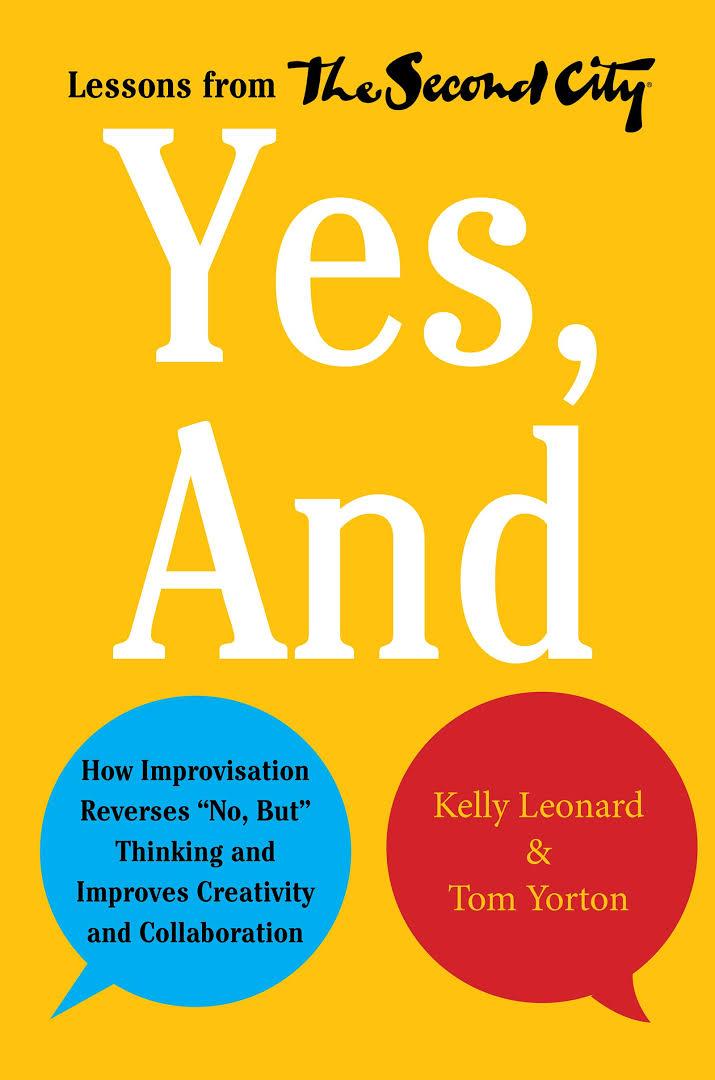
Yes, And
How Improvisation Reverses No, But Thinking and Improves Creativity and Collaboration
Kelly Leonard; Tom Yorton

Legislative Theatre
Using Performance to Make Politics
Augusto Boal

The Second City Unscripted
Revolution and Revelation at the World-Famous Comedy Theater
Mike Thomas

The Improv Handbook
The Ultimate Guide to Improvising in Comedy, Theatre, and Beyond
Tom Salinsky; Deborah Frances-White

Impro
Improvisation and the Theatre
Keith Johnstone

Improvising Cinema
Gilles Mouëllic
Related Games
Pillars/columns
Pillars/Columns is a variant of the Pillars game in which two or more performers serve as human columns that deliver random lines when touched by scene players. The scene players must seamlessly integrate each interjected line into the ongoing narrative. The game emphasizes justification skills and the ability to maintain scene coherence despite constant disruption.
Bucket
Bucket is a short-form game in which scene suggestions, character traits, or constraints are written on slips of paper and placed in a bucket before the show. During scenes, performers draw slips at designated moments and must immediately incorporate whatever is written into the ongoing action. The random elements inject controlled unpredictability, forcing performers to accept and justify offers that could not be anticipated. The game rewards flexibility, quick thinking, and the ability to absorb any suggestion without hesitation. Bucket demonstrates the core improv principle that accepting external offers, no matter how disruptive, produces stronger and more surprising scene work than relying solely on performer-generated choices.
Columns/pillars
Columns/Pillars is a scene game in which two or more simultaneous scenes share the stage, separated by imagined walls or columns. Players switch between scenes, and thematic or verbal connections between them emerge organically. The structure rewards performers who listen across scenes and find resonant parallels.
Sound Effects
Sound Effects is a short-form game in which one or more players perform a scene while a designated sound-effects player (or audience members) provides live audio: crashes, music, ambient noise, animal sounds, or any sound they choose. The scene players must justify and physically embody whatever they hear. The game trains acceptance of external offers, physical commitment, and real-time narrative adaptation. It appeared as a recurring game on *Whose Line Is It Anyway?*
Actor's Nightmare
Actor's Nightmare is a short-form scene game in which one performer reads scripted dialogue verbatim from a play or text while their partner improvises responses to justify those lines and sustain a coherent scene. The challenge for the improviser is to receive fixed, often unexpected lines and make them land within a believable dramatic reality.
Alter Ego
Alter Ego is a short-form scene game in which each main character has a second performer standing directly behind them who voices the character's inner thoughts. Two players perform a scene with dialogue and action while their respective alter egos narrate the unspoken subtext: desires, fears, judgments, and contradictions that the characters would never say aloud. The contrast between what a character says publicly and what they actually think generates natural comedy and dramatic irony. The game highlights the role of subtext in scene work and rewards performers who create clear, exploitable gaps between surface behavior and true feelings. Alter Ego appears across multiple improv traditions and is documented in Andy Goldberg's Improv Comedy among other sources.
How to Reference This Page
The Improv Archive. (2026). Pillars. Retrieved March 17, 2026, from https://improvarchive.org/games/pillars
The Improv Archive. "Pillars." The Improv Archive, 2026. https://improvarchive.org/games/pillars.
The Improv Archive. "Pillars." The Improv Archive, 2026, https://improvarchive.org/games/pillars. Accessed March 17, 2026.
The Improv Archive is a systemically maintained repository. The archive itself acts as the corporate author.